🚀 Introduction
In this article, you’ll learn:
- What a vulnerability really is
- Why news headlines often say “a vulnerability was discovered”
- Why vulnerabilities affect everyone, not just tech experts
✅ What Is a Vulnerability?
A Simple Definition
A vulnerability is a weak point or flaw in a system, application, or device.
Think of it like this:
- A house with a broken door lock
- A safe with the password set to “0000”
In IT and cybersecurity, these risky conditions are called vulnerabilities.
🔐 Why Vulnerabilities Matter
If a vulnerability exists, it can lead to serious problems such as:
- Personal data being stolen
- Unauthorized logins
- Website defacement
- Service outages
In short:
👉 A vulnerability is the easiest entry point for attackers.
💡 Most attackers don’t break in using complex techniques.
They usually exploit the weakest available point.
❓ Is a Perfectly Secure System Possible?
If vulnerabilities didn’t exist:
- Unauthorized access would be nearly impossible
- Data leaks would be extremely rare
- Services would be much safer
But in reality:
👉 No system is 100% secure.
That’s why security always involves:
- Finding vulnerabilities
- Fixing them
- Checking regularly
🌍 Where Do Vulnerabilities Affect You?
Vulnerabilities are not limited to enterprise systems.
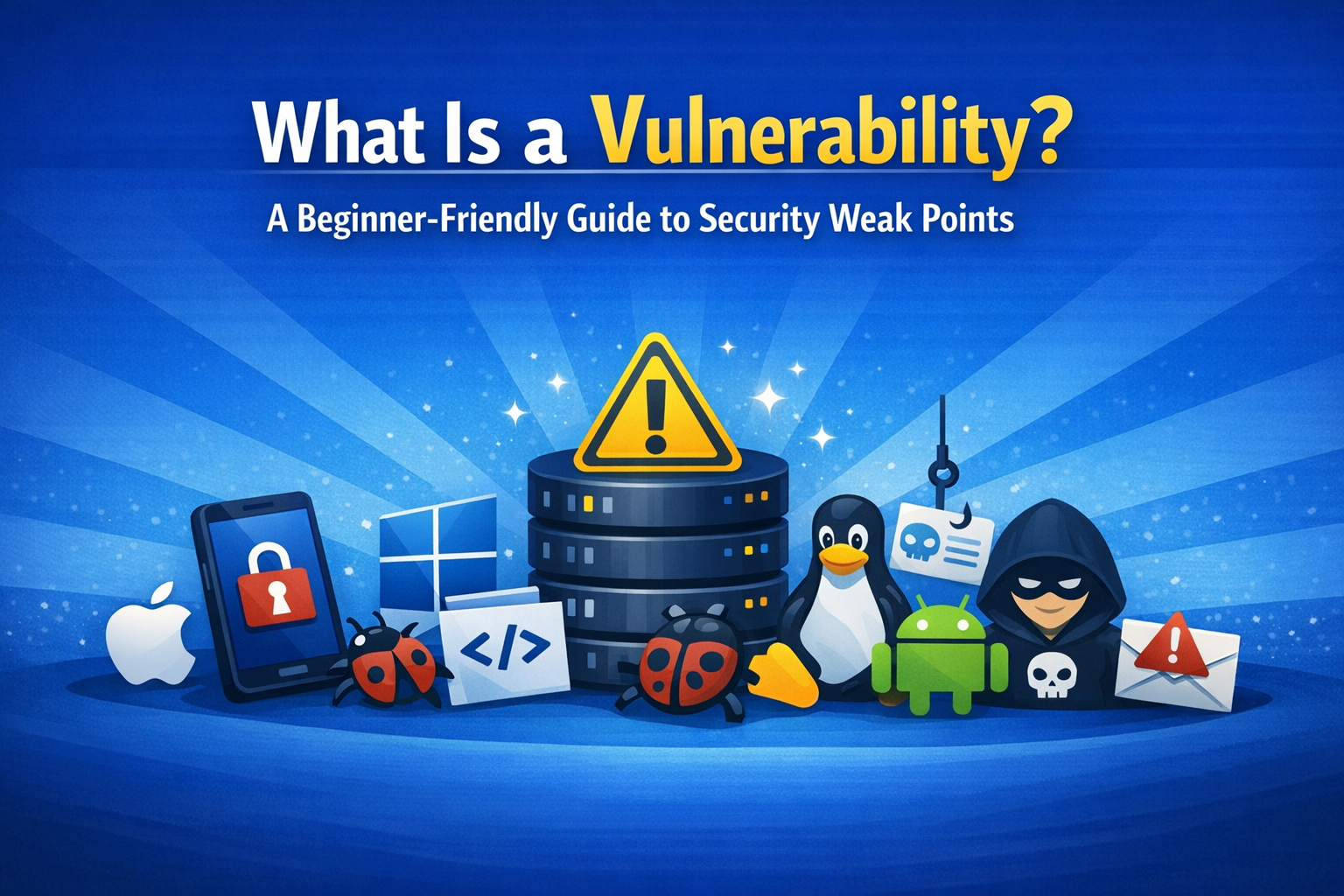
They exist in everyday technology, including:
- Smartphone apps
- Operating systems (Windows, macOS, Linux)
- Websites
- Game consoles
- Home routers
📱 That “Please update your device” notification?
In most cases, it’s fixing security vulnerabilities.
💡 Security Myths & Realities
🕳️ Hackers Are Better at Finding Holes Than Breaking Doors
Movies often show hacking as fast typing on black screens.
In reality, attackers usually:
- Check lists of known vulnerabilities
- Look for unpatched or outdated systems
🔍 It’s less like cracking a high-security vault
and more like finding an unlocked front door.
⏱️ Public Disclosure Changes Everything
When a vulnerability is publicly disclosed:
- Those who update quickly → safer
- Those who ignore updates → at risk
That’s why security experts say:
👉 Skipping updates is like voluntarily leaving holes open.
🔥 Vulnerabilities Are Like Fire Hazards
- Fire safety → prevention before a fire
- Security → mitigation before exploitation
In both cases:
Responding after the incident is already too late.
📚 Trusted Resources
- IPA (Information-technology Promotion Agency, Japan):
https://www.ipa.go.jp/security/ - JPCERT/CC (Japan Computer Emergency Response Team):
https://www.jpcert.or.jp/ - Wikipedia (Information Security Vulnerability):
https://en.wikipedia.org/wiki/Vulnerability_(computing)
🛠️ What to Learn Next
- Difference between viruses and malware
- What unauthorized access really means
- Why updates matter more than new features
- What is a WAF (Web Application Firewall)?
Coming Soon
- Basics of password management
🎯 Final Takeaways
- ✅ A vulnerability is a security weak point
- ✅ Attackers target weaknesses, not complexity
- ✅ Vulnerabilities affect devices you use every day
- ✅ Updates fix known security flaws
- ✅ Awareness alone significantly reduces risk
🌱 Security isn’t just for experts.
Understanding the basics is the most powerful defense.